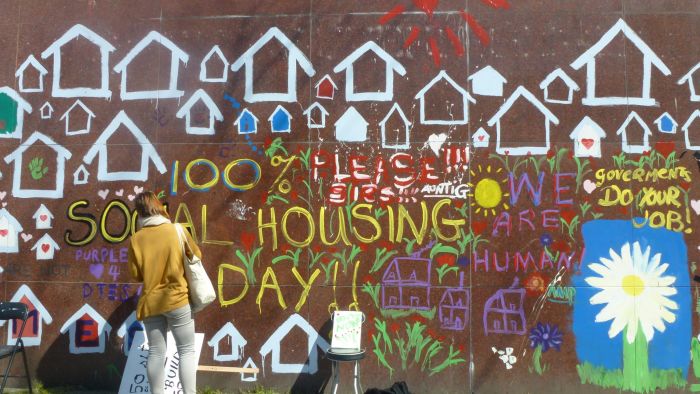
Wednesday, December 11, 2013

Sermon for the Holy Fools

Hi guys,

Some folks have been asking to read a piece I had published in Geez magazine this month.  It was written for a "Sermons you would never hear in church" contest.  First, the disclaimers and fine print:

1: I don't know if you can really call it a "sermon" with a 750 word limit.  And sermons are meant to be spoken, not written & read, in my opinion.
  
2: I believe the purpose of a sermon is to open up Scripture and let it breathe in our lives.  I don't explicitly do that here - it's more autobiographical for the purposes of the contest.  Nevertheless, I believe there is some Good News (gospel) in it.

3: When I wrote this back in August, I was coming out publicly, and I had strong thoughts & feelings.  I still do, but know that these things shift and settle somewhat as time passes.

4: This is the version I submitted - the version they published was edited somewhat, including a title change.

5: Even though I'm posting this here, you should still go out and buy (and subscribe to) Geez!  It's a fringes-of-church kind of publication that never fails to make me think, even when I vehemently disagree with the columnists.

Ok enough!  Here it is....

-----------------

Sermon for the Holy Fools


“You’re a holy fool.”

I hardly ever trust those next-thought-that-pops-into-your-head-is-God’s-message-to-you exercises.  But a year ago, I was on retreat, that’s what they told us to do, and that’s what I heard.

At the time, it made me laugh.  I interpreted it as a divine “lighten up”.  More recently, though, I wondered if “holy fool” had deeper meaning.  Google unearthed some intriguing Russian Orthodox saints who claimed the title, but they didn’t seem to have much in common with me.  

So what kind of holy fool am I?

I am a fool in love.  I am a female pastor who fell in love with another female pastor at an evangelical seminary.  We spent five years standing at a crossroads.  Would we love in a celibate, closeted way, and seek ordination in our denomination?  Or would we love in a romantic, hopefully eventually married way, and be disqualified?

Yesterday, we told everyone we’re gay and in love, irreversibly becoming (in the minds of many) two women pointing their love all in the wrong directions and calling it good.  We have become the Lesbian Pastors, our sexuality suddenly overshadowing all our other legitimate character traits.  We have been called saints for our ministry among the addicted, the homeless, and the teenaged, but by revealing that we ourselves belong in a marginalized group, we will be called sinners and fools.

Being gay is not foolish; we couldn’t have chosen otherwise.  What’s foolish is when two pastors reveal they’re gay when they could have easily hidden and progressed in the “don’t ask, don’t tell” world of evangelicalism.  Even more foolish: two gay pastors pursuing marriage mostly because it seems right to the Holy Spirit and to them, because they can’t imagine how their mutually sacrificial love increases the overall sin quotient of humanity.  How foolish, like the Virgin herself, to proceed on this reputation-destroying course after having an experience of God they can’t conclusively validate in Scripture; to have nothing to lean on except this mischievous God, and the few would-be Elizabeths in their lives who call them blessed.

While this “fool” role is new to me, the “holy” part has been my life’s project.  I’m the eldest child of a pastor, the product of a long fixation on other people’s perceptions of my piety.  Regrettably, striving to earn the favor of God and my peers has yielded more pride and perfectionism than holiness.  Ironically, receiving regular criticism for this foolish life choice could create the very conditions required to wean me from my addiction to approval.  It could be what propels me down the long path toward true, humble holiness.  

One test of my developing holiness will be whether my love can overflow even onto those who call us fools, or worse.  When they label us “sinners,” will I grin and answer, “You bet, but probably not in the ways you’d think”?  When they hurl more biting titles like “dyke,” “heretic,” and “abomination,” will I translate them “fool,” and rejoice in the company we keep?  Will perfect love overcome all our fear?

As of today, we are recently pulpit-less holy fools in training.  We can no longer pastor among those in our clan, now that we have been denominationally deemed unfit to do so.  Sadly, we have plenty of sermons they do not have ears to hear.

So instead of preaching to them, I speak now to the fellowship of the disqualified, to the addicted, incarcerated, prostituted, shamed, pitied, and damned.  You outcasts, you so-called sinners, all holy fools, whether gay or straight, tell me: do you have room for me, my words, and my gifts?  How wide is your tent?  I know I only have one lesbian toe over your threshold, while most of my well-educated, middle-class, white, cisgender self is firmly rooted in the world of the privileged.  Can I come in anyway?

I want to be with you, to be counted among you, you who renounce all the condescending descriptors in my last paragraph and instead dare to call yourselves beloved.  I want to follow you and the Spirit into places we’ve been told not to go.  I want to taste freedom by your side and speak grace in your presence.  I want to delight together in the mischievous king who chooses the foolish to shame the wise, the weak to shame the strong, and then surprises us by welcoming everyone, wise and foolish, ashamed and unashamed, to a wedding feast without a guest list.

Monday, October 21, 2013

Deconstructing Gentrification Justifications: "We have a right to live here and you don't."

I've been inspired to pick up this gentrification series again, thanks in part to some recent thought-provoking comments on previous posts by a business owner.  Apologies for my 4-month hiatus... I had some life changes that took up most of my mental energy for a while.  I'll write about that soon enough.

It's been a while, so if you need a refresher on what I've written so far on gentrification, read my introductory post here.  This post is the last in a series of analyses of some of the common justifications for gentrification.  Next, we'll look at some potential ways to respond to the reality of gentrification.

1. Increasing the diversity of the neighbourhood (social mix) is good.
2. We need to do something about this neighbourhood!  Anything is better than what's there now.
3. Gentrification is inevitable, so at least be happy you get some benefits!
4. We have the right to live here, and you don't.

-------------------------------
I think one of the most honest, fundamental reasons why upper-class and middle-class people defend gentrification is because they believe they have more of a right to live where they want than people on welfare.  Most people won't say that, because it sounds harsh, but deep down, this is how we've been trained to think.

I sympathize somewhat with the lament of middle-class people who grew up in Vancouver, and who unfortunately cannot afford to buy a house in the city.  In an abstract sense, they've been displaced by out-of-control Vancouver real estate.  Many end up buying homes in Surrey or Coquitlam, and some spend hours commuting in and out of Vancouver for work.  They work hard, and still cannot live in the city they love.  Meanwhile, they see DTES residents - addicts, panhandlers, people who don't seem to contribute anything to society - living on prime real estate right next door to downtown Vancouver, thanks mostly to taxes on middle-class hard-earned dollars.  DTES residents don't even seem grateful for this unearned privilege - they seem to feel entitled to live in that neighbourhood.  What gives them the right?

Well, what gives anyone the right to live anywhere?  Whom does the land belong to?  Now that's a question that could take us in a whole bunch of directions.

The most obvious response, from our discussion above, is that the land belongs to the person(s) who purchased it.  Money gives you the right to live somewhere.  If this is true, then gentrification is quite defensible.  If you've got the money to buy the land and build the condos and the upscale boutique shops, who are we to stop you?  We'll feel a little miffed if you got your millions from your parents and didn't work for it.  But man, if you've worked hard to earn your money - especially if you started at the "bottom" and "pulled yourself up by your bootstraps" - well you should be able to live wherever you can afford to live, and open businesses wherever you can afford to open businesses.

The issue I have with this framework (and with capitalism in general) is that it assumes a level playing field.  It assumes that because everyone in Canada has access to the same (early) education, everyone has the same potential to become financially successful, or at least stable, and have the same claims to land and business, so long as they work hard enough.  I just don't think this is true.  I think the system automatically benefits some and tramples others.  Many of the trampled ones actually work harder than the ones who benefit.  And a large percentage of the trampled ones don't even have bootstraps to pull themselves up by.  Those who benefit from the system often feel bad and give charitably to those it tramples, which helps for a bit, but doesn't bring equality, and ultimately disempowers and further robs the dignity of the trampled.
The DTES - diverse for centuries.

A second response to "Whom does the land belong to?" could be: the people who have historical claim to it.  This could be the people who have lived there the longest, or the people who have shaped it most, or who have some other legal claim to it.  Vancouver is part of the unceded land of the Coast Salish peoples.  This means it was never given over in treaty or taken by war.  If I were using this framework of historical claim, I would give these First Nations dibs on questions of ownership.  In much more recent history, the DTES has been home to all kinds of people - Chinese, First Nations, Japanese, even Black people, with one thing in common - for at least the last 70 years, they have been predominantly low-income people.  That's another claim of sorts.

By the way, there are interesting parallels between the colonial attitudes that justified displacing the Coast Salish peoples from this land centuries ago and the neocolonial attitudes that some people use to justify gentrification today.  Take the "doctrine of discovery" and the related idea of "terra nullius" - the way the Europeans legitimized taking ownership of "discovered" lands, because they were "empty."  Earlier this year, business "pioneer" Brandon Grossutti, owner of the relatively new high-end Pidgin restaurant in the DTES, told the National Post : "They say that we're displacing people from their neighbourhood, but we aren't.  There was no one in this building for as long as anyone can remember.  Then we came along."  In fact, until five years ago, the building that now contains the Pidgin, along with 21 new market-rate condos, contained 30 relatively low-cost rental units.  All tenants were evicted in 2008 (which apparently is "as long as anyone can remember") to make way for this more profitable development.  In a recent Georgia Straight article drawing these same comparisons, Dave Diewert said, “Justifying displacement, in the past and the present, is a certain rhetoric: ‘Those who are displaced are inferior anyway. They’re not using the land properly. They’re in the way of progress, and after all, we know best.’ It’s a continuously patronizing discourse which attempts to legitimize displacement.”
Forced displacement of Squamish people from Kitsilano area in 1920.

I've got to bring in my own bias on this question of "right to the land."  I believe the land ultimately belongs to God.  We are tenants of God's land, foreigners and strangers in it (Lev. 25:23).  My "hard-earned" money?  It doesn't actually belong to me, because nothing does.  I don't actually have any inherent right to anything, even if I feel like I worked for it.  Everything in my so-called possession is really an unmerited gift from God - a gift not just for me, but the benefit of everyone's needs, and thus a gift I'm often called to re-gift.  In the words of Basil the Great, one of the church fathers, giving to the poor is simply "returning what is theirs."  In this framework, work is not done in order to earn money.  Work is a privilege, a chance to use our God-given skills and knowledge in order to serve our neighbours.  When someone is unable to work, because of job shortages, or illness, or unbearable pain numbed by addiction, it's not contempt toward them that we should feel, but sorrow, and a desire to restore that dignity to them, because everyone is impoverished when their gifts and skills are not put to use.

Early Jewish law does not assume the economic playing field is automatically level, rather it institutes regular playing-field-leveling events: every seven years, debts were forgiven and slaves were freed.  Every fiftieth year was the year of Jubilee, when all land was supposed to be returned to its original owners.  Since land was the primary means of wealth, those who had been forced to sell it due to hard times would have a real chance in the system again.

That sounds lovely and utopian, you may say, but we live in a capitalistic system.  Even if we wanted to try to go  back to something like that, we couldn't.  Today's world is too complicated.  Maybe so.  I'm no expert in socioeconomic systems and how to change them.  But I do know that I'm not satisfied with money, or even work, being the only thing that dictates who deserves what.

Some of the oldest low-income housing in the DTES.
I'm not entirely comfortable with the language of rights at all, to be perfectly honest.  I prefer the language of responsibility.  I believe we are responsible to each other - as Ani Difranco says, we owe each other the world.  Those of us who have more resources are responsible to those who have less.  I believe we're responsible to go above and beyond our people-trampling capitalistic system's expectations, to think creatively about how to bring about real equality.  We're responsible to also consider historical claims to land.  And those of us with more power and choice are going to be held responsible if we choose to use that power to push out or discredit the voices those who are more vulnerable.  Even if I feel displaced or limited by the Vancouver real estate market as a middle-income person, I still have way more choices than my friends on welfare who only have $375 allotted for housing expenses.  If I make the choice to further gentrify the neighbourhood where they've found housing for the last 70 years, which will increase their rental rates and further limit their housing options... it may be within my rights, but it's not a great way to be human.

** If you'd like to continue digging into the issue of gentrification this week, check out this event in Vancouver.

Friday, May 17, 2013

Deconstructing Gentrification Justifications: "Gentrification is Inevitable"

This is a shorter post as part of my gentrification series... I'm eager to finish this soon.  It's entirely possible that the DTES will be completely gentrified before I'm even done writing!

First, if you haven't already done so, read my introductory post on gentrification here.  I'm now  in the middle of trying to deconstruct some of the common justifications for gentrification.  The first two are written, and now we're on to the third.

1. Increasing the diversity of the neighbourhood (social mix) is good.
2. We need to do something about this neighbourhood!  Anything is better than what's there now.
3. Gentrification is inevitable, so at least be happy you get some benefits!
4. We have the right to live here, and you don't.

-------------------

"Gentrification is inevitable."

Even though this is one of the most common justifications and cop-outs I hear,
I won't waste a lot of time on it.

Earthquakes, tornadoes and floods are inevitable.
Rain in Vancouver is inevitable.
Growing older is inevitable.
Death is inevitable.

Gentrification is NOT inevitable.
It is the result of human choices.
We have the human capacity choose differently, if we want to.

I refuse to believe that developers have no choice except to build condos in the DTES.
I refuse to believe that restauranteurs are inextricably compelled to open fancy restaurants in the DTES.
I refuse to believe that the mayor's hands are tied, that the premier is powerless,
that the prime minister is stumped,
and that none of them can find any money to put toward building housing for low-income people.
I refuse to believe in a personified "market" that must run rampant and do whatever it wants to do.
I refuse to believe that we have no choice but to bulldoze over a bunch of marginalized people.
I refuse to justify these practices by offering a few scattered units of social housing in the condos, like crumbs from our feasting table.

I refuse to succumb to this brazen lack of imagination and willpower.

I refuse to say,
"Sorry, current DTES residents, the market is our god, and the market has spoken.
Because people will buy condos here, we really must build them here.
Placating art in the DTES, courtesy Bob Rennie.
Because people will come eat and shop in this trendy, edgy new locale, we really must open businesses here that you can't afford.
And because this will drive up your property values and rents,
I'm sorry, but most of you are going to have to leave this neighbourhood you call home.
We can't stop it.
But cheer up!
At least a couple of you can live among your new rich neighbours in these five new social housing units we're building!
And we'll even agree to hire one of you as a minimum-wage dishwasher in this new bistro.
Because we care."

I refuse to say, "There is no alternative."
The TINA slogan must be buried with Margaret Thatcher.

Why?
Because we are creative, innovative, free human beings.

DTES residents paint the old police station.
There are, in fact, plenty of alternatives.
We can take a variety of paths.
We can choose people over profits.
We can choose to sacrifice the fulfillment of our "wants" so that others can have their needs fulfilled.
We can choose to create a sanctuary for those who have been consistently victimized and sinned-against (more on this in a couple weeks).
We can do it if we want to.

But do we want to?
Maybe that's what some of us mean by inevitability...
... that gentrification is inevitable because most of society wants it so badly.
I can let that fear paralyze me, too.
Especially after the dismal election results on Tuesday night,
   along with Christy Clark's expression of gratitude to the condo developers who made it all possible.  (Click that link - you'll see that even Bob Rennie is feeling magnanimous and asking his colleagues to protect 3 blocks of the DTES from gentrification!  What a swell guy.)

These are the questions we SHOULD be asking:
Is there enough compassion in Vancouver to prevent gentrification?
Is there enough selflessness to preserve a neighbourhood for people who have no other option but the street?
Is there enough will to listen, to understand, to prioritize, and to empathize with people who have endured so much suffering already in their lives?
Or will we continue to see them as people who don't deserve our care? (more on that in the next post)
Are we resigned to becoming a boring, greed-and-market-driven version of Vancouver?

Friends, gentrification CAN be stopped,
but only if we want to stop it.
We have to remind each other to be the best, most compassionate version of ourselves.
We have to call each other out when we're becoming worse versions of ourselves.
We have to do it together.

Sunday, April 14, 2013

Deconstructing Gentrification Justifications : "Anything is better than what's there now!"

Hunger striker entering his 3rd week of hunger.  Read more here.
I've been slacking off a bit on this gentrification blog series, even as the debate on gentrification in my neighbourhood has heated up with the Pidgin Restaurant Picket and the Hunger Strike by Formerly-Homeless Dave, so I'm going to try to get back in gear and complete it.

First, if you haven't already done so, read my introductory post on gentrification here.

I'm in the middle of trying to deconstruct some of the common justifications for gentrification.  The first is done, and we're on to the second.

1. Increasing the diversity of the neighbourhood (social mix) is good.
2. We need to do something about this neighbourhood!  Anything is better than what's there now.
3. Gentrification is inevitable, so at least be happy you get some benefits!
4. We have the right to live here, and you don't.

-------------------

"We need to do something about the Downtown Eastside."

Imagine hearing someone say this.  In your imagination, whose voice is speaking?  How are they saying this?  Are they frustrated?  Hopeful?  Empathetic?

When I hear it in my imagination, I primarily hear the voices of people who live in other neighbourhoods.  Privileged people.  They might drive by Main and Hastings on their way to work.  Some of them work in the DTES.  Some of them come and eat in the new restaurants opening up in the DTES.  Some of them just read about the DTES in the paper.  Some of them really care about the people in the DTES.

I hear this phrase in my own privileged voice, as someone who is desperate to fix broken things.  But it makes me ask, why are we privileged people interested in "doing something" about the DTES?

If I'm honest with myself, it's not primarily to help all the people living in the DTES.  It's actually to help myself.  Because I'm uncomfortable with, or embarrassed about, or ashamed of the DTES.  I'm ashamed at how money has been wasted.  I'm embarrassed it hasn't done much good.  I'm uncomfortable with the suffering I see.

Christena Cleveland's blog does a good job of unpacking this.  She writes, "Solving oppressed people’s problems rids privileged people of their own discomfort... I periodically ask myself, whose discomfort is motivating me to act – my own or the oppressed person’s? Oftentimes, I must admit that my own discomfort with oppressed people’s suffering primarily motivates me to advocate for oppressed people. I feel better when they are no longer suffering and I no longer have to stand with them in their suffering or think about their suffering. When this occurs, their feelings and needs are secondary to my own.  And once again the situation revolves around me, the privileged person. Mission not accomplished."

I don't think the middle and upper class of Vancouver are entirely evil and greedy and just want to take over the DTES.  I don't think they're all just eager to sweep addicts and poor people out of sight.  I think there are a lot of Vancouverites who really and sincerely believe that gentrification will help the people of the DTES.  The problem with this is that they haven't asked the people of the DTES whether they want their neighbourhood to be gentrified, or how they want to be helped.**
 
This whole idea of "asking the residents" may sound strange if you see people in the DTES as dependents who are unable to think for or beyond themselves.  Now it is true that some people in the DTES are in such deep life crisis, or are so mentally ill that thinking big-picture and long-term about the neighbourhood would be very difficult.  When "survival" is at the top of your priority list, contributing to the future of your neighbourhood is, frankly, pretty low on your list.  It's also true that some people are just happy to leech off the system and not contribute anything to the health of the DTES (though it would be interesting to explore how they got that way... that's a topic for another blog post!).  But people in such limiting situations exist in every neighbourhood - they're just not always as visible as they are in the DTES.  And there are plenty of current DTES residents who are eager to dream about what their neighbourhood could look like.

The approach I've grown to admire is often called an asset-based approach, or a strengths-based approach.  It's based on the idea that people are experts on their own lives.  It privileges the wealth of lived experience they possess.  The residents start by identifying the strengths or assets of their community.  Can't think of any strengths in the DTES?  Did you know that DTES residents contribute more volunteer hours to their community than any other neighbourhood in Vancouver?  The DTES also has a higher concentration of artists than any other neighbourhood in Vancouver.  And many people, including myself, find an unparalleled sense of community, empathy and acceptance in the DTES.

After identifying strengths, the residents identify their community's weaknesses, ask what they can contribute to solve their own problems, and in what specific areas they want to request help from outside sources. 

A good example of a strengths-based and community-led approach would be the CCAP Vision for the DTES, summarized in their "Assets to Action" report.  Hundreds of DTES residents contributed to this beautiful vision for their neighbourhood.  It is definitely worth a read.

It's simply not true that "anything would be better than what is in the DTES now."  "Anything" implies experimentation regardless of the consequences, and "anything" will likely fail to protect the most vulnerable people in the neighbourhood, and fail to observe or preserve the strengths of the community.  No matter how compassionate and eager to help privileged people may be, if we proceed without listening and letting oppressed people lead the way, if we treat DTES residents like children to be parented or savages to be tamed, and if we rush into fixing problems primarily to rid ourselves of discomfort, we will certainly fail.  (Just ask the average third-world citizen how well it's gone over when NGOs have done this kind of thing in their countries.)  Simply "trying something new," and treating the DTES like a laboratory for city planning,a zoning, and policing is unethical and unjust.  We need to free the residents of the DTES to dictate what "would be better" for themselves, to determine their own future goals, and to decide how to get there, for the sake of their children and grandchildren.

 "We need to do something about the DTES."  I can't wait for the day when the majority of people empowered to dream and act and speak this phrase are the residents of the DTES, and when the rest of us have the patience and the trust to let them do so.

----------------------------

**In a way, the people of the DTES are currently being asked how they want to be helped.  I am serving as one of the low-income representatives on the Local Area Planning Process (LAPP) for the DTES.  This city-funded process was a concession prize to the neighbourhood after we lost a fight against a big condo project in Chinatown.  It took a year to set the terms of reference for the LAPP, and our thirty-person committee, made up of low-income people, business people, and service providers, has now been meeting for over a year.  We're supposed to have a plan for the neighbourhood by November.  But the process has been incredibly frustrating for almost everyone involved.  I spoke up at the last meeting to point out that our time is almost entirely consumed by listening to reports and dealing with governance and process issues, leaving us almost zero time to brainstorm, to discuss controversial issues and to attempt to find points of consensus.  I have low expectations that the plan will reflect the wishes of most DTES residents, and even lower expectations that the City will follow the plan.  So I'm not sure yet whether this counts as "asking the neighbourhood how it wants to be helped."  I'll keep you posted.

Monday, April 01, 2013

Easter #5

He is risen indeed!

Friday, March 29, 2013

Good Friday #5

It's the first thing we did as a church
Good Friday
outdoors
Jodi said we shouldn't start on Easter
no right to celebrate life in the DTES
if we haven't tasted the death
so we did
twenty-one of us
made a pinecone cross

today was our fifth Good Friday
hardly any left from that first twenty-one
(where did they all go?)
welcoming other communities to join us
our biggest crowd ever
wandering the streets
drawing stares

it is right that we should be
in the park
Oppenheimer is Gethsemane
we listen to the betrayal

it is right that we should be
at community court
not at the provincial court
it was the community
who wanted him dead
can't blame big shot judges
we all killed him

it is right that we should be
on stolen ground
contested space
he had no place of his own

it is right that we should be
in the alley
avoided all days but today
Judah points down at
the "needles with the poison still in them"
dumping ground
toilet of the people
the stink of it
death strips his dignity 
death rules even him
at least for now

it is right to end on the beach
how excited we are to build 
this instrument of execution
much bigger this time, 
wood, not pinecones
kids balance on it
Jenny and Adria hammer in
some old, rusty nails


biking home afterward
past the women on the corner
whose bodies are for sale
I marvel at how
this place can still muster a Good Friday
on a beautiful sunny day

I grew up an easy-Easter girl
now I spend all year
in Good Friday
 
some days I think he's here
here among the poison needles
with the abandoned
with the betrayed
with the devil on his back

other days
he's dead

Monday, February 18, 2013

Deconstructing Gentrification Justifications: "Mix it up a bit, why don't you?"

First, if you haven't already done so, read my introductory post on gentrification here.

For a while now, I've been reading the comments on online articles about gentrification in the DTES.  I know, I know, reading online comments is a bad idea, a sure way to experience the worst in humanity.  But I have this theory that you can actually distill some popular opinions from online comments if you cut through the inflammatory language and go to the core of the argument.  I have boiled them down to four main categories, and I will dedicate a short post to each of them, from least brutal to most brutal (and perhaps most honest).

1. Increasing the diversity of the neighbourhood (social mix) is good.
2. We need to do something about this neighbourhood!  Anything is better than what's there now.
3. Gentrification is inevitable, so at least be happy you get some benefits!
4. We have the right to live here, and you don't.

-------------------

Social mix (my definition): The idea that it is desirable to have a balance between lower-income and higher-income people (and their respective housing types) in a neighbourhood, in order to promote diversity, sustainability, health, and quality of life for everyone.

Some social mixing happening at Jacob's Well.
I should really be the most ardent proponent of the "social mix" argument.  My work, in essence, is social mix.  As I'll discuss below, most people in life prefer to form fairly comfortable friendships with people who are similar to them.  But my two DTES communities, Jacob's Well and God's House of Many Faces, both promote the importance of mutually transformative friendships between people from very different groups, which is an integral part of the larger-scale work of reconciliation that we pray will happen between people groups.  We believe that the Kingdom of God is incredibly diverse, and that we should start practicing this Kingdom life right now on earth.

The problem is, it's not easy.  We need practice.  Jacob's Well and church are about training ourselves in this neighbour-love.  Loving our very-different-neighbor takes hard work, humility, patience, willingness to be wrong and to learn, a high tolerance for awkwardness & misunderstandings, and the desire to see the best in each other.  Even when we begin with these good intentions, we regularly screw things up and offend one another. We have to suck it up, forgive each other, and start again.

So imagine what happens when higher-income people move into the neighbourhood without a real desire to get to know and love their low-income neighbors.  You don't need to imagine.  I'll give you a couple examples.

Until they moved to Mount Pleasant last month, a social media company called Hootsuite had offices in the DTES. One of their employees posted this on Twitter the day they moved: "Last day in #DTES office, I will probably miss the midget prostitute the most. Smell ya later Eastside (literally). Hello Mt Pleasant!"

One year ago, a man named Mike Comrie wrote an article in the National Post called "Raising kids amid the hookers, junkies and drunks of Vancouver's worst neighbourhood."  The father of two wrote this: "I had to quickly learn how to politely decline enthusiastic gifts of “recycled” stuffed animals offered by dumpster divers, and how to take it in stride when alarmingly filthy individuals, clearly intoxicated and probably insane, wanted to exchange baby talk with our little ones."  Ironically, this middle-income man who social-mixed himself into the DTES ends his letter by articulating hopes that gentrification will move along more quickly.

(For some responses and alternative perspectives on raising kids in our neighbourhood, see the video below, and PLEASE read the very thoughtful reply to Mike's letter from Krista-Dawn, a mother of two and member of my church, posted here.)


It's not that Mike Comrie or the woman from Hootsuite are evil people.  They're fairly normal people.  They're like you and I - they tend to associate with people who are a lot like them, and when they encounter people who are very different from them, they often misunderstand them, are afraid of them, or are disgusted by them.  This same tendency is what leads many low-income people in the DTES to want to stay together in the DTES instead of moving to neighbourhoods that don't already include low-income people (besides the fact that there is no housing for them there).  They want to be in a place where they fit in, where they don't have to pretend to be something they're not, where they're not treated with fear or disgust.  A place where they're with people like them, where they feel a sense of belonging and community.

Woodwards housing
My biggest problem with social mix is that it naively posits that merely putting diverse people close together will produce health and neighborliness.  It won't, without willing participants and the help of the Holy Spirit, because of the human tendencies I described above.  It hasn't produced neighborliness at the most highly touted social-mix project in our 'hood, the Woodwards housing complex.  There, 500 condos stand beside 200 units of social housing, in what is supposed to be a beautiful, diverse revitalizing community in the neighbourhood.   My friend Karen lives in the social housing at Woodwards.  She has yet to even meet a single person who lives in the condos.  But she has seen the whole area around her building transform into a high-income zone, and she can no longer afford anything at the restaurants and stores.

Some take the idea of social mix so far as to say that putting rich people in poor neighbourhoods will make poor people more likely to want to improve their lives (i.e. stop behaving so badly and being so lazy).  The sheer hubris of this thinking is staggering, not to mention the way it ignores the root causes of poverty.  (Oh yeah, definitely, what poor people need in order to escape their poverty is the reminder of what it looks like to be rich.)  It also implies that the rich people are the healthy ones, and that they don't need to improve their lives or learn from the poor.  People in the DTES have much to teach, if we'll listen, and this is part of what it means to be neighbourly.  For starters, they have learned how to live and build community in the midst of incredible racial and cultural diversity.  The DTES is, in some ways, very mixed already.

If we really believed in the benefits social mix, we'd be eagerly making room for poor people to live in rich neighbourhoods.  But this is not the case, as I highlighted in this satirical blog post.  Most Vancouver neighbourhoods fight hard to prevent social housing buildings, housing for the mentally ill, and shelters from being built on their turf, because it would bring "dangerous" people near and would decrease their property values.  We see far more "NIMBYs" than "YIMBYs". 

That's why I'm inclined to believe that social mix is a utopian, benevolent-sounding mask for what amounts to capitalist and colonialist greed.  More on that in a future blog post.

Having said that, "social mix" is still a key part of my long-term, Kingdom-of-God vision for the earth.  I need to learn from poor people, and they have things to learn from me.  We need to learn to love one another as neighbours.  So as we think about solutions to gentrification, we can't just settle with staying completely segregated.  We need ways for people who are ready and eager to be neighbourly to actually move in and be neighbourly, without displacing the most vulnerable.  More on that in a future blog post, too!

Sunday, January 27, 2013

Gentrification: the series

One note before I start: I tend to hate New Years' resolutions, but I have a sort-of-resolution for 2013.  I really want to practice writing this year, to find my voice.  So my goal is to write a blog entry at least once a month.  I say this with fear and trembling... please hold me accountable!

For a while now, I've wanted to dedicate a post to gentrification, one of the most important and contentious realities in my neighbourhood today.  I've written bits and pieces on it here (satirically) and here (when I moved in), but I've never really delved into it.  I think the reason I've resisted writing about gentrification is that I don't feel sure of my convictions - I've felt conflicted about my own analysis and response to it.  But I think it's time to tackle this topic.

One of my problems is that I have too many thoughts, so I'm going to embark on yet another series of posts.  This post will be the introduction to gentrification.  Then I'll examine some of the justifications I hear for gentrification.  Finally, I'll take a theological approach and ask what our response to gentrification could look like.

What is gentrification?  You'll get a different spin on it depending on whom you ask.  Some might say it's neighbourhood revitalization.  Others call it social cleansing.  This video gives a tongue-in-cheek, cynical view of gentrification.  It's a process that's happening in many poor urban centers worldwide.  In North America, it usually begins when artists and hipsters (and - according to the video - lesbians!) move into inner-city, impoverished neighbourhoods that most middle- and upper-class people avoid or consider undesirable.  Trendy restaurants and coffee shops pop up.  Real estate developers track the new interest, build condos and re-brand the neighbourhood as "edgy" and "affordable."  Landlords renovate old low-income housing buildings and increase the rent, resulting in the "renovictions" of people who once lived there but can no longer afford it.  Property values increase in the surrounding area, so that even in surviving low-income housing buildings, rents go up.  New businesses move in, catering to wealthier people, and security guards are posted.  Poorer people are eventually priced out of the neighbourhood, which is now so transformed that it doesn't even seem like their neighbourhood anymore.  But it's prettier, "safer," and business is definitely booming. 

The situation in Vancouver is amplified by the reality that developers are running out of room to build in the downtown core.  But there are plenty of people who would be happy to live in close proximity to downtown, like, say, just east of it, in the neighbourhood I live in, the Downtown Eastside (DTES).  Gentrification has been happening here over the last several years, and the pace is accelerating.  Now condo developments have been built or announced at each edge of the neighbourhood, and even right in the middle of it.  Every week or so I see brand new restaurants and stores - places whose decor and prices indicate that they do not seek to attract the clientele of the low-income majority currently living in the neighbourhood. 

A kid from church running through the park, pre-V6A condos
As most of you know, I co-pastor a church that meets in a park on Union Street, in the Chinatown sub-district of the DTES.  We chose that location because many of our church members live in Solheim Place, a social housing building for families directly across the street from this park.  (This location also has an interesting history of gentrification and displacement in the 1960s, which I'll explain in one of the next posts in this series.)  During our first summer there, four years ago, there were two big holes next to the Solheim building, where two new condo developments were slated to go in: Ginger and V6A.  Over the next couple years, the condos were completed, and an influx of middle-income and high-income people moved in.

Douglas at work (photo from http://scoutmagazine.ca)
A couple low-income businesses on the ground level of this block of Union Street closed their doors for good as the condos were being completed, including a barber named Douglas who did $9 haircuts.  He was especially popular among the low-income Chinese seniors in the neighbourhood.  A friend tells me that the owner of that property increased the rent until the barber had to leave, and sold it (presumably for a great price) to new owners.

These new owners had the idea to consult the neighbourhood about what kind of business they wanted there, saying it "reduces risk for business investment, and provides added pressure for the business to act accountably in the neighbourhood."  They posted their web address on the vacant store window, asking people to vote in their online poll.  And lots of people did.  Well, people who regularly use computers and the internet, so... maybe not so many Chinese seniors and low-income people.  Eventually the idea of a grocery store and eatery won out, and that space became Harvest Community Foods, which the condo dwellers (and others passing through on the bike route) seem to really enjoy.

This is where gentrification gets complex and messy.  The thing is, there is a lot to like about Harvest Foods.  They sell organic, seasonal, local food.  They purchase from small Vancouver businesses with sustainable practices.  They buy produce from SOLEfoods, a DTES community garden organization that employs people in the neighbourhood, including someone from our church.  They've given money to Union Gospel Mission and are about to fundraise for the local school lunch program.  They have a few lower-priced items.  They actually tried to do some kind of neighbourhood consulting, which is more than you can say for most gentrifying businesses.  I've been there twice, and both times the staff were extremely friendly, even giving me and my friend a slice of pie for free.  I'm sure they would gladly welcome my low-income church friends from Solheim Place, were they to show up.  But the fact remains that none of my church friends can afford the quality groceries at Harvest Foods on a welfare budget of $26 a week for food.  I would wager that the barrier for them is even subtler than price - they do not feel that it is a space that's for them, that is catering to them.  And Douglas, the low-income barber who cut their hair, was kicked out to make space for it.  But I honestly believe no one meant any harm by it - in fact, the good people at Harvest Foods may have no idea that there have been any negative impacts.

Life & Color Salon, 233 Union St.
There is a new hairdresser on the block.  Last June, three doors down from Harvest Foods, Life & Color salon opened its doors.  But if the Chinese seniors still want haircuts, they'll have to shell out $40-75 from their $610 total monthly income.


I will return to this Union Street case study over the next few weeks and months, as I deconstruct some of the justifications for gentrification, and as I ask how Christians in particular should or could respond to gentrification.  Please stick with me!

Saturday, December 15, 2012

Mental Health and the Church - 5 Tips for Pastors & Friends

I'm a little late getting back to this two-part series on Mental Illness and the Church, based on the class I took at Regent in May called "Darkness is my Only Companion."  Go here to read part 1: Top 5 Things That Surprised Me. 

Mental illness is in the news because of the tragic shootings in Connecticut yesterday.  Although I've seen nothing confirming that the gunman suffered from a particular mental illness, and I worry about the stigmatization of all mentally ill people as potentially dangerous to society, I welcome the discussion about how best to care for people with mental illnesses.

In this post I want to give some advice for pastors and friends seeking to love and support people who struggle with mental illness.  This would obviously be better written by someone who is actually struggling with mental illness, but I'll do my best to pass on what I heard from those in my class.

5 great ways to love & support mentally ill friends

1. Actively fight against the stereotyping, belittling, marginalization and stigmatization of mentally ill people.

Mental illness is incredibly stigmatized in our society.  The mentally ill are seen either as weak people who should work harder to deal with their issues and be normal, or as dangerous people to be feared, locked up, or at least avoided.  This second one is exacerbated by works of fiction - how many evil antagonists do you know who aren't portrayed as at least a little bit "crazy"? - but also by the stories that tend to get picked up by news media.  It will be interesting to see how this plays out in the reporting of the Sandy Hook tragedy.  In reality, people with mental illnesses are more likely to be victims of violent crime than to be perpetrators of these crimes, because their ability to react quickly in self-protective ways can be impaired.  These debilitating stigmas (stigmata?) have made their way into the church, for reasons I'll examine below.  And yet I think if the church were to seriously examine its own heroes and saints, I think they'd find it plausible that a lot of them struggled with mental illness. Jeremiah?  St. Francis?  I say this because I also believe some mentally ill people may actually be more aware of the spiritual realm, and more in touch with the mystery of God, although discernment between helpful and harmful visions and spirits may take years to develop.  Whether or not these people are prophetic, they deserve dignity and respect simply because they are made in the image of God.  We talked a lot in class about how Jesus clothed the Gerasene demoniac after freeing him from his demons.  How can we figuratively "clothe" and protect the dignity of those we know for whom mental illness is a daily reality?

Some ideas - let's jump on this bandwagon and "call BS" on the ways youth with mental illnesses are bullied and isolated.  Let's follow John Franklin Stephens' lead and inform people when they're using words that wound and belittle.  My personal challenge?  Root out the word "crazy" from my vocabulary.  I use it startlingly often. 

2. Remind your friends that our brains can be ill while our souls are well.

What's the difference between your brain, your mind, your soul, and your "self"?  We may all have different ways of distinguishing between these concepts, with varying degrees of overlap.  The brain is perhaps easiest to define, because it's a tangible bodily organ.  But while the "mind," "soul," and "self" all involve some functioning of our brain, they are also broader and more abstract, describing our consciousness and our ability to relate to others, including God.  Although we sometimes talk in the church as though we're easily divisible into bodies and souls, we are not.  We are whole, complex beings. 

Mental illness is something that happens in the body, in hormones and brain pathways.  Sometimes it's triggered by an event that touches the spirit, like an intense experience of loss or grief.  Sometimes it has spiritual side effects, such as an altered sense of self, or a diminished ability to sense God's presence.  Not feeling God, or not feeling joy or hope, is an awful experience, but it doesn't automatically mean you're outside of relationship with God, or that your soul is causing your mental illness.  Even though our bodies and souls overlap, and even though we tend to associate faith with our emotions and thoughts, having a mental illness doesn't mean your soul is sick any more than having lung cancer means your soul is sick.  It doesn't mean you are possessed or that God has given up on you.  As my professor writes, "The soul, as the self in relation to God, continues healthy in anyone as long as that person is in Christ, relating to and witnessing to God" (101).  We should also affirm that it's possible for humans to have a sick souls in all sorts of ways that have nothing to do with mental illness.

Having said all this, it's still necessary for people to figure out how to engage with God in the midst of their mental illness.  So, we need to...

3. Bear their burdens, pray for them, and listen to their "dangerous" questions.

We are not called to offer advice or lectures, but to be present, to listen to their experience and to sit with them as they wrestle with pain and confusion.  Why am I sick?  Why does anyone suffer?  Did God do this, or allow this?  If so, why?  to test me?  punish me?  humble me?  teach me?  Is there meaning in my illness?  As Justin Lee pointed out in his new book "Torn," we need to remember that Job, in the Old Testament, asked similar questions, and his friends did quite well at supporting him... until they opened their mouths.  We must be slow to speak, quick to listen, and always committed to pray for our friends. 

The community of faith is crucial in these situations.  We must learn to lament together, to weep with those who weep.  But are also able to hold onto faith and express hope when our friends' illnesses prevent them from doing so.  We can let them lean on our faith, especially in times of corporate worship.  In a journal entry, my professor explained why she continued attending church and praying the liturgy with her congregation, even in her darkest moments: "I need to wrap my tongue around the gracious words of others, in hopes that their words will nourish my soul, somehow sink in and sprout into trees of righteousness, into songs of hope. Because I have no words of gratitude in me, only shame at my absolute hardness of heart." (87)

We can offer our presence when our friends are in hospital.  My professor suggested that when people are in the psych ward, we should visit, but keep our visits to 15 minutes at most, since they can be more draining difficult than we realize.  When she visits people, she asks them a few questions about how they are doing, offers to read a psalm, and to pray, and then she leaves and visits again after a week.

It's also important to be present and attentive to the family members of people with mental illnesses, offering practical support - e.g. meals, babysitting, retreat time. 

4. Persevere in love, and you could be part of changing their brains.

There are many things we cannot do. Most of us do not have the expertise to lead people through therapy or prescribe medication, which is why it is crucial to refer friends to psychiatrists and therapists if they are not already in touch with them.  Pastors are not adequate substitutes for these trained professionals.  However, there is something I learned that underlines why friends and pastors are so important.  That something is neuroplasticity.
 
 It's a beautiful thing, the neurological adaptability - the pliability - of adult brains.  A gracious, God-given example of redemption and transformation, I believe.  In the womb and in early childhood, our brains are at their most adaptable stage, developing circuits and patterns, pathways between brain regions, ways of doing things and reacting to stimuli.  Scientists used to think that after childhood, our brains were static and could not change.  But studies of stroke and brain damage victims have shown that brains can adapt well into adulthood.  Brains can re-wire themselves to adapt to new circumstances, creating new neurons, new pathways, and new ways of reacting.  Positive stimulation through rewarding activities and environments of love and care over the long term will actually create new thought patterns and re-wire brains.  More research is needed, but this suggests that our long-term friendships with mentally ill people may improve their experience of life to the extent of contributing to altered patterns in their brain.  Through long-term love, we may be able do things that psychiatrists and therapists cannot even do.  I find this incredibly hopeful. 

5. Call up Sanctuary and have them come do a workshop or seminar at your church.

Sanctuary is a Vancouver-based ministry co-directed and founded by my former colleague Sharon Smith.  They come alongside churches in order to "create awareness of mental illness, improve understanding of the mental health recovery journey, and facilitate caring activities to meet the needs of people living with mental illnesses and their families."  Sharon has taught me much of what I know about mental illness, and I believe she and her colleague have much to teach the church as a whole.  I highly recommend contacting them, especially if there are people in your church who are in need of care, or wanting the church to understand their journey with mental illness.